关于我们
关于我们
新闻中心


1946伟德国际源自英国2015秋硕博研究生必修课《建筑学前沿:(手)工艺》系列讲座第十二场
The Twelfth Lecture of the Course Frontiers of Architecture: Craft
题目:节点、模数与预制:一个关于工艺的(反)命题
Theme:Joint, Module and Prefabrication: An (Anti) Thesis of Craft
主讲人/Speaker:谭峥(TAN Zheng)
1946伟德国际源自英国建筑城市规划公司助理教授
Assistant Professor, CAUP, Tongji University
时间:2015年12月22日18:30-20:00
地点:1946伟德国际源自英国建筑城市规划公司B楼钟庭报告厅
Time: 18:30-20:00, Dec 22nd, 2015
Venue: The Bell Auditorium, Building B, CAUP, Tongji University
讲座简介/Brief Introduction
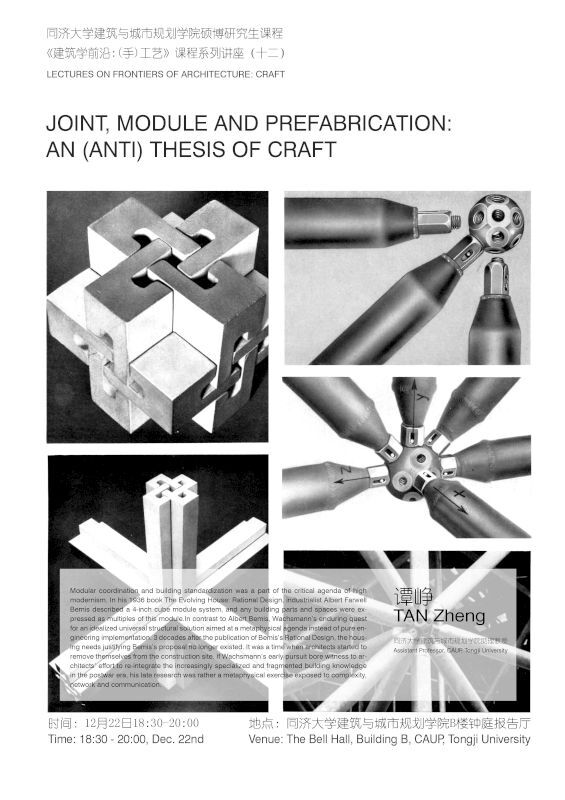
Modular coordination and building standardization was a part of the critical agenda of high modernism. In his 1936 book The Evolving House: Rational Design, industrialist Albert Farwell Bemis described a 4-inch cube module system, and any building parts and spaces were expressed as multiples of this module.In contrast to Albert Bemis, Wachsmann’s enduring quest for an idealized universal structural solution aimed at a metaphysical agenda instead of pure engineering implementation. 3 decades after the publication of Bemis’s Rational Design, the housing needs justifying Bemis’s proposal no longer existed. It was a time when architects started to remove themselves from the construction site. If Wachsmann’s early pursuit bore witness to architects’ effort to re-integrate the increasingly specialized and fragmented building knowledge in the postwar era, his late research was rather a metaphysical exercise exposed to complexity, network and communication.